Securing Media Assets in Cloud Storage
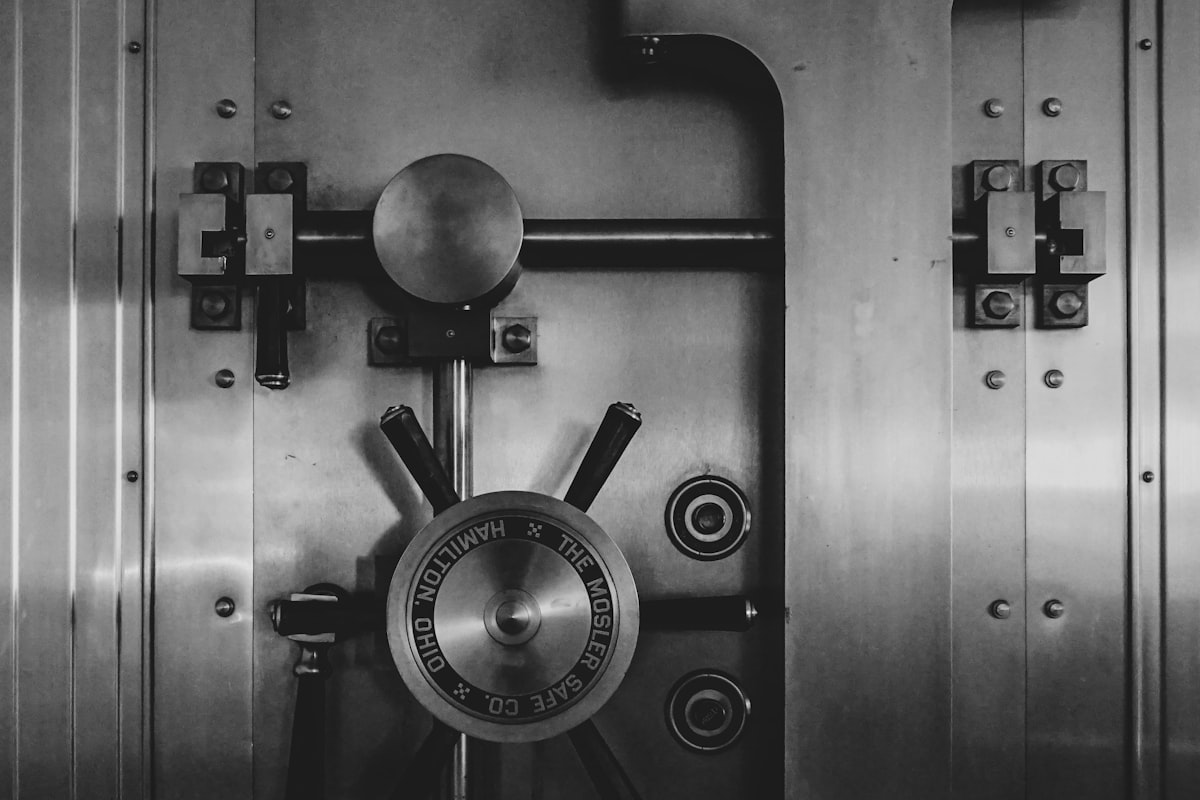
Footage, masters, voices and brand assets are among the most valuable and sensitive things a client entrusts to a studio. Securing them in cloud storage is a discipline of layered controls, where each layer assumes the others might fail.
Table of contents:
Why media security is its own problem
Media assets carry unusual risk. A single leaked master can cost a campaign, a pre-release film, or a celebrity's likeness, and the files are large, widely shared across a production, and handled by many tools. Standard data security applies, and media adds concerns of its own: protecting content in transit to editors, controlling who can download a master, and proving a chain of custody. The approach has to treat every asset as sensitive by default.
Because footage moves constantly between people and systems, security cannot be a wall at the perimeter alone. It has to travel with the asset, through encryption, access control and monitoring that follow the file wherever it goes.
Encryption in transit and at rest
The baseline is encryption everywhere. Files are encrypted at rest in storage so a compromised disk or bucket reveals nothing usable, and encrypted in transit so nothing can be intercepted as it moves between a workstation, the cloud and a review tool. Managing the encryption keys carefully, with rotation and strict access, is as important as the encryption itself, because a key in the wrong hands undoes the protection.
For the most sensitive work, client-side encryption means an asset is encrypted before it ever reaches the cloud, so the storage provider never holds readable content. This adds friction and is worth it when the material demands the highest assurance.
Access control and least privilege
Most breaches come from excessive access rather than broken encryption. The principle of least privilege gives each person and system exactly the permissions they need and nothing more, so a compromised account exposes a limited blast radius. Roles scoped to a project, time-limited access for freelancers, and prompt revocation when someone leaves keep the circle of trust tight.
Signed, expiring URLs are the workhorse for sharing media safely. A reviewer receives a link that works for a set window and then stops, which avoids permanent public links and the leaks they cause. Every access is tied to an identity rather than to a shared secret.
Monitoring, watermarking and provenance
Prevention is never perfect, so detection matters. Logging every access, alerting on unusual downloads, and reviewing activity turn a silent breach into a visible event a team can respond to. For pre-release material, forensic watermarking embeds an invisible identifier unique to each recipient, so if a file leaks, its source can be traced, which is a powerful deterrent on its own.
Provenance closes the loop on authenticity. Recording where an asset came from and how it changed builds a chain of custody that matters both for security and, increasingly, for proving that footage is genuine in an age of synthetic media.
Backups, retention and resilience
Security includes availability. Assets need reliable, versioned backups so an accidental deletion, a corruption or a ransomware event does not lose irreplaceable footage. Keeping copies across regions, and testing that they can actually be restored, is what separates a real backup strategy from a false sense of safety. Retention policies then ensure material is kept as long as needed and disposed of responsibly when it is not.
These measures protect against the mundane failures that are far more common than a targeted attack. Human error and hardware failure account for most data loss, and resilience is the answer to both.
A media security checklist
Strong protection comes from layering controls so no single failure is catastrophic. The checklist below is the baseline we apply to sensitive client media.
- Encrypt every asset at rest and in transit, and manage keys carefully.
- Apply least privilege, with project-scoped and time-limited access.
- Share media through signed, expiring links tied to an identity.
- Log and alert on access, especially unusual downloads.
- Forensically watermark pre-release material per recipient.
- Keep versioned, cross-region backups and test restores regularly.
Each layer assumes the others might fail, which is exactly the mindset that keeps valuable media safe. Applied together, they protect both the asset and the trust behind it.
Protecting what clients entrust to us
Securing media in the cloud is a layered discipline of encryption, least-privilege access, monitoring, watermarking and resilient backups. Handled well, it protects a client's most valuable assets and the trust that comes with them.
We build this protection into every platform we deliver. Explore our streaming platform development, or start a project.