Large Language Models for Screenwriting: A Co-Pilot for Creatives
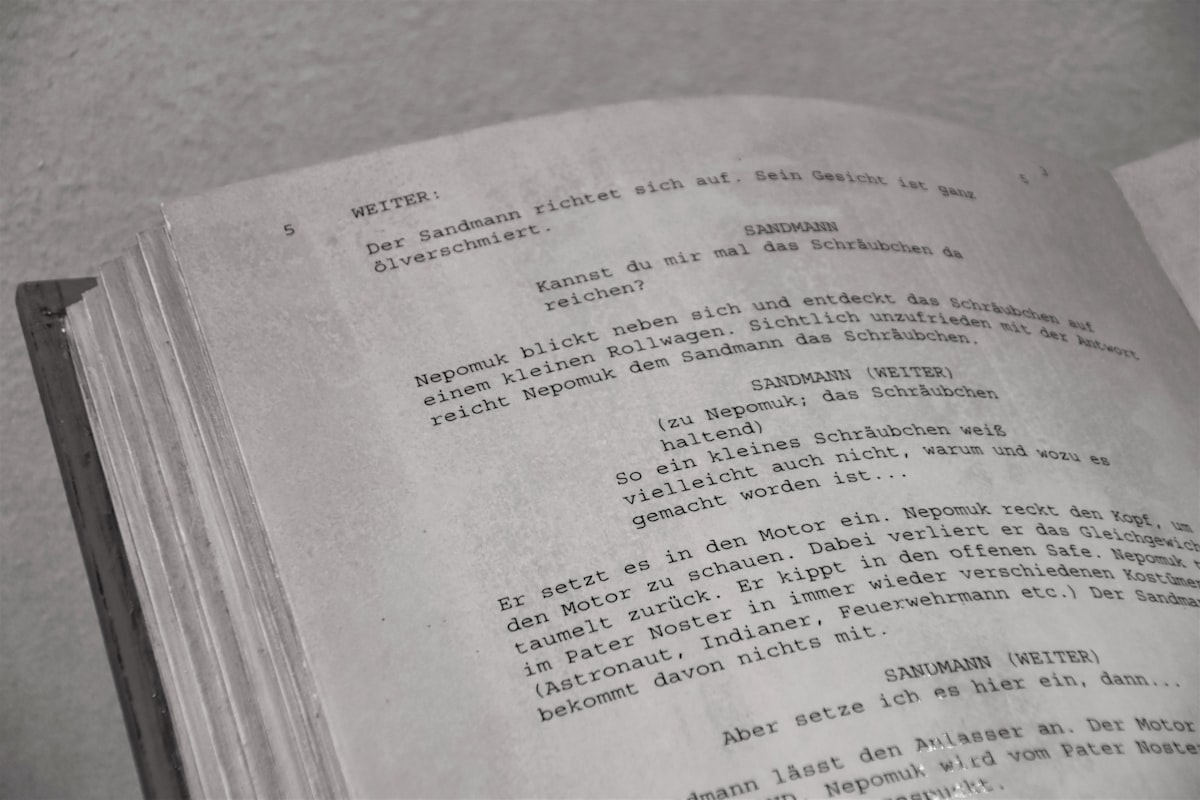
Large language models have become a genuine tool in the writers' room, useful for brainstorming, drafting and refining scripts. Used well, they accelerate the parts of writing that benefit from speed while leaving the creative authority firmly with the human writer.
Table of contents:
A co-pilot for the writer
The most productive way to use a language model in screenwriting is as a co-pilot. It generates options, explores directions and handles mechanical drafting quickly, while the writer sets the vision, makes the judgements and owns the final voice. This framing matters because a model is strong at fluency and variety and weaker at genuine originality and taste, which are precisely what a writer provides.
In practice the human stays in the driving seat throughout. The model proposes, the writer disposes, and the script remains a human-authored work that used a fast assistant rather than a machine-written artefact.
Where models genuinely help
Language models excel at the early, expansive phase of writing. They generate loglines and premises by the dozen, brainstorm what-if variations on a scene, suggest names and world details, and rough out structure so the writer has clay to shape. They are also useful for the mechanical passes: tightening dialogue, checking consistency, and reformatting to industry standards. Each of these compresses hours of routine effort.
They shine at overcoming the blank page. A quick set of imperfect options is often exactly what unsticks a writer, who then discards most of them and builds on the spark in the rest. For many writers that first unstick is the single most valuable thing the tool provides, and it is enough on its own to justify a place in the process.
Where they fall short
A model has no lived experience, no point of view, and no real stakes, so its unguided output tends toward the generic and the familiar. It reaches for cliche, resolves tension too neatly, and misses the specific, surprising detail that makes writing feel alive. Left to itself it produces competent, forgettable prose, which is why the writer's editorial hand is essential on everything it generates.
Continuity and subtext are also hard for models across a long script. Tracking a character's arc, planting and paying off a setup, and sustaining a theme are things a writer must own, using the model for local assistance rather than global structure.
A practical workflow
A useful workflow keeps the human at each decision point. The writer defines the story, characters and tone, then uses the model to expand specific beats, generate dialogue variations, or pressure-test a scene. Every generation is a draft to be judged, kept or discarded, and the writer rewrites in their own voice. The model accelerates iteration without ever setting direction.
Prompting well is a skill in itself. Giving the model rich context about the characters and the scene, and asking for options rather than a single answer, produces material a writer can actually use instead of bland filler.
Rights, originality and disclosure
Using models in a professional context raises real questions. Writers rightly want to protect their authorship and their livelihoods, and productions need clarity on the rights and originality of generated material. Our approach keeps a human as the author of record, uses models as assistive tools, and is transparent with clients about how the work was made. This respects both the craft and the people who practise it.
Handled this way, the technology supports writers rather than displacing them. It removes drudgery and speeds exploration, and the human voice that audiences connect with stays exactly where it belongs.
A screenwriting-with-AI checklist
Getting real value from a model in the writers' room comes down to a few habits. The checklist below keeps the work fast, original and clearly human-authored.
- Set the vision, characters and tone before involving the model.
- Use the model for options and drafts, and keep final decisions human.
- Give rich context in prompts and ask for several variations.
- Edit every generation in your own voice and discard the generic.
- Own continuity, subtext and character arc across the whole script.
- Keep a human as author of record and disclose the workflow.
Followed consistently, these habits turn a language model into a tireless drafting partner while the writing stays unmistakably the writer's own.
Speed for the writer, authority with the writer
Language models are a powerful addition to screenwriting when they serve the writer. They accelerate brainstorming and drafting, and the human retains vision, taste and authorship. That balance is what turns a novelty into a genuine creative advantage.
We blend AI tools with human craft across our production work. Explore our AI film and production services, or start a project.